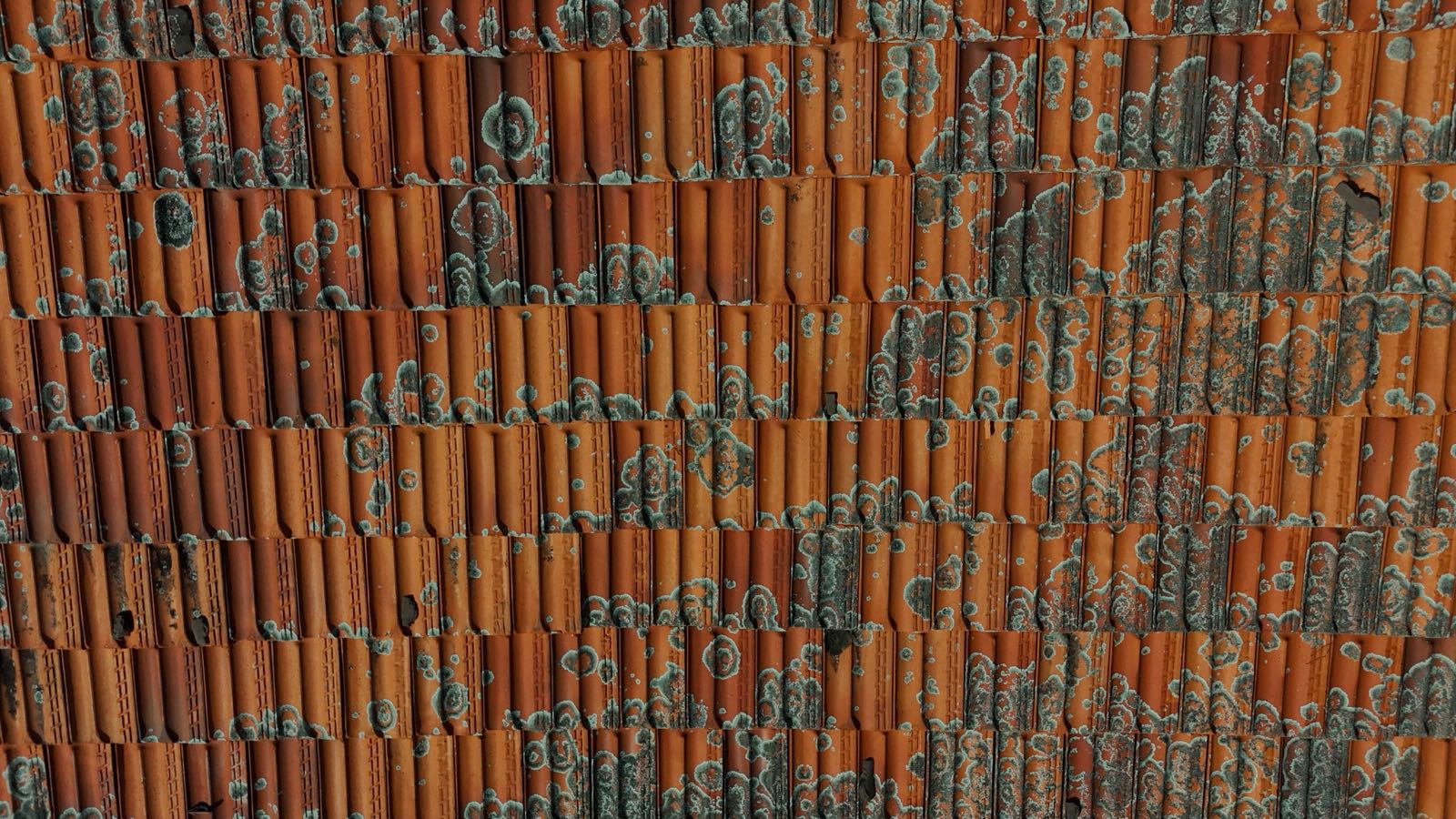
01Blown pointing and bedding
High pressure lifts the mortar that holds ridge caps and hips. Re-pointing a roof costs multiples of treating one, and it is the most common damage we are called to look at.
02Water under the flashings
A lance forces water up under laps and flashings and into the roof cavity. The ceiling stain shows up weeks later, by which point nobody is connecting it to the clean.
03Chipped and opened-up tiles
Terracotta and cement tiles chip and lose their surface under pressure. A more porous tile holds more water, which is exactly what the moss wanted.
04It grows straight back
Blasting removes the visible growth and leaves the roots and spores. The roof looks done on the day and is greening again within months, so it goes back out to quote.
05Somebody on the roof
A blast means a person walking tiles with a live lance. That is a working-at-heights exposure and a tile-breakage exposure, on your building, every time.
06The repaint that traps moisture
The usual follow-up sale is an acrylic roof coating. It seals moisture into the tile rather than letting it breathe, which is a bigger problem than the one it was sold to fix.
Treat it
One visit, then the weather does the work
- Applied at low pressure from ladders at the gutter line
- Worked from the eaves, never blasted or scraped
- Broad spectrum. Kills organic growth where it grips
- Bonds to the surface and stays active up to 24 months
- Pointing, bedding, tiles and flashings are untouched
- The same treatment works on render, walls, paths and hardstand
It is slower on purpose. The result appears over three to twelve months as the growth dies and weathers off.
Blast it
Fast on the day, expensive afterwards
- Strips the visible growth and leaves the roots
- Lifts pointing and bedding, chips tiles, strips coatings
- Drives water under flashings and into the cavity
- Puts a person on your roof with a live lance
- Regrows within months, so the cycle repeats
- Often followed by an acrylic coating that traps moisture in the tile
There is a place for restoration-grade cleaning. It is not routine maintenance of a roof you intend to keep.
The number that actually matters
The cheapest roof clean is the one you are not doing again in two years.
Compare it across a maintenance cycle rather than per visit. A blast is priced per clean and bought again on a short loop, because the growth was never killed, only removed. A treatment is bought once and the roof stays ahead of it, which is why the gap widens every year you hold the asset.
Then there is the tail nobody prices in: the re-point, the ceiling repair, the tile replacement, the working-at-heights exposure. Those are not certainties on any given job, but they are the reason blasting is the expensive option on a roof you are responsible for.
After the treatment
A treated roof eventually regrows
Perth's weather never stops feeding the growth, so a treatment slows the return rather than ending it. On a roof you intend to hold for another decade, the next step is making the surface harder to grip in the first place.
The protect step
Breathable and colourless, not a repaint
Once the growth is dead and the roof is clean, it can be sealed with a breathable mineral coating that helps the surface shed water. Unlike an acrylic roof repaint, which traps moisture inside the tile, this one lets the surface breathe. That step is our sealing service, and it is the part that carries the 10-year guarantee.