
Glass scratch removal · Perth & WA
Scratched glass isn't replacement glass.
A scraper on a builders clean. Render or grinder spatter down a whole elevation. Someone keying a shopfront. The quote to reglaze arrives and everyone assumes that's the only option. It usually isn't, and the difference is routinely thousands of dollars. We take scratching out of glass in situ and polish the pane back to optical clarity.
Why you're being told to replace it
Because almost nobody in WA does this.
Restoring a scratched pane costs a fraction of replacing it, and across a facade or a run of units that gap runs to many thousands of dollars. So why is replacement the default answer? Not because restoration doesn't work. Because hardly anyone can do it.
People badly underestimate what's involved. A scratch is missing glass. Taking it out means removing glass across the surrounding surface, down level with the base of the scratch, then blending that area back into the pane so it reads flat and optically clean from both sides and in raking light. That is a specialist discipline with its own abrasives, its own machines and its own judgement, and it takes years to get right.
Almost nobody in this state has done that work. So the pane gets written off and someone orders new glass. We are Western Australia's only dedicated glass restoration and scratch removal specialists, we do it full time, and we have years of experience behind us.
More specialised than people realise
Purpose-cut abrasives stepped through grades, machines worked to suit the glass in front of them, and the judgement to read depth in raking light before anything is touched. None of it overlaps with cleaning or glazing. It is its own trade, and that is exactly why so few people offer it.
Ask who told you it's a write-off
A cleaner, a glazier and a restorer will give you three different answers about the same pane, and only one of them is holding the kit that could save it. The quote to reglaze usually comes from someone with nothing else to offer.
Not just windows
Facades, balustrades, shopfronts, commercial glazing, splashbacks, mirrors, glazed partitions and display glass. If it's glass and it isn't a shower screen, it's worth asking about.
Assessed before quoted
Depth decides everything and depth cannot be read off a photo. We look at the glass, tell you what it needs, and quote the job. If it should be replaced, you'll hear that first.
What we get called to
How glass usually gets scratched.
The builders clean
A blade or scourer dragged over render dust and fabricating debris, leaving fine parallel scratching across whole panes. The single most common job we see, and almost always restorable.
Render & grinder spatter
Cement slurry, mortar splash, grinder sparks and weld spatter landing on unprotected glazing during construction. Hot particles bond into the surface, so scraping them off just adds scratches.
Vandalism & graffiti
Keying, scratchiti and acid tagging on shopfronts and lift lobbies. Restoration is the fix that doesn't need a glazier, a road closure or a new pane on lead time.
Wind-blown sand
Coastal and site-adjacent glazing sandblasted over time into a fine haze. Not one scratch but a whole surface, and it responds to the same process.
For builders and strata
The pane is the cheap part.
When scratched glazing turns up as a defect on a new build, the cost that hurts is never the glass. It's everything the glass drags with it.
One trade, on site
We work on the glass where it is. No remanufacture lead time, no glazier, no crane or scaffold booking to pull and reset a unit, no reglazing the same opening twice, and no handover date sliding because a pane is eight weeks away. On toughened, laminated, oversized or double-glazed units that gap is the entire argument.
Everything else moves
Order the unit, wait out toughening or lamination lead time, re-book access and craneage, pull the old unit, make good the reveal, reset and reseal. And the programme carries all of it. It's the right answer when the glass is cracked. It is an expensive answer when the glass is just scratched.
The work
What scratch removal actually looks like.
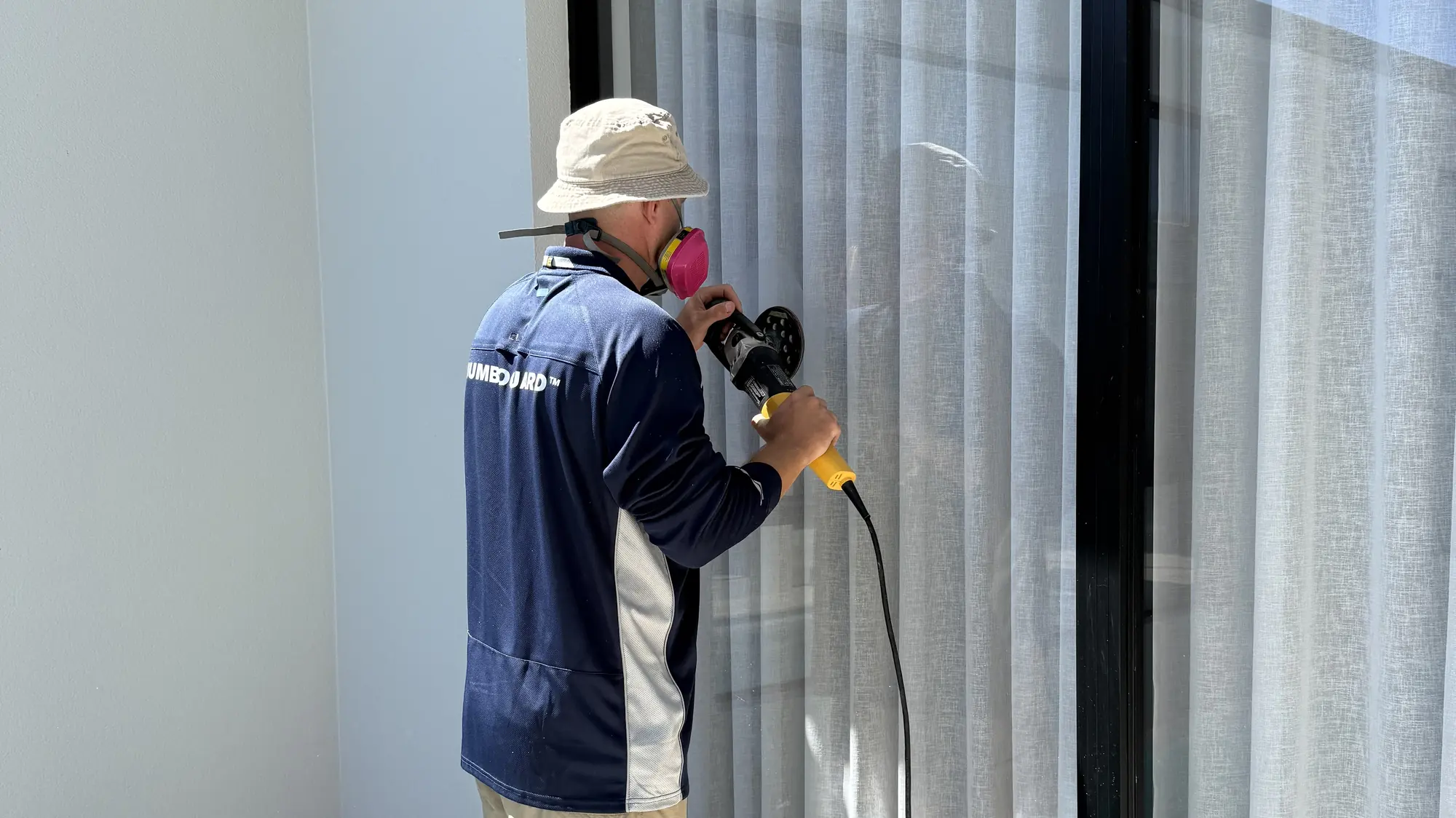
Scratches are notoriously hard to photograph. They read instantly to your eye at a raking angle and then vanish on camera, so a before-and-after rarely proves anything. Here is the work itself instead.
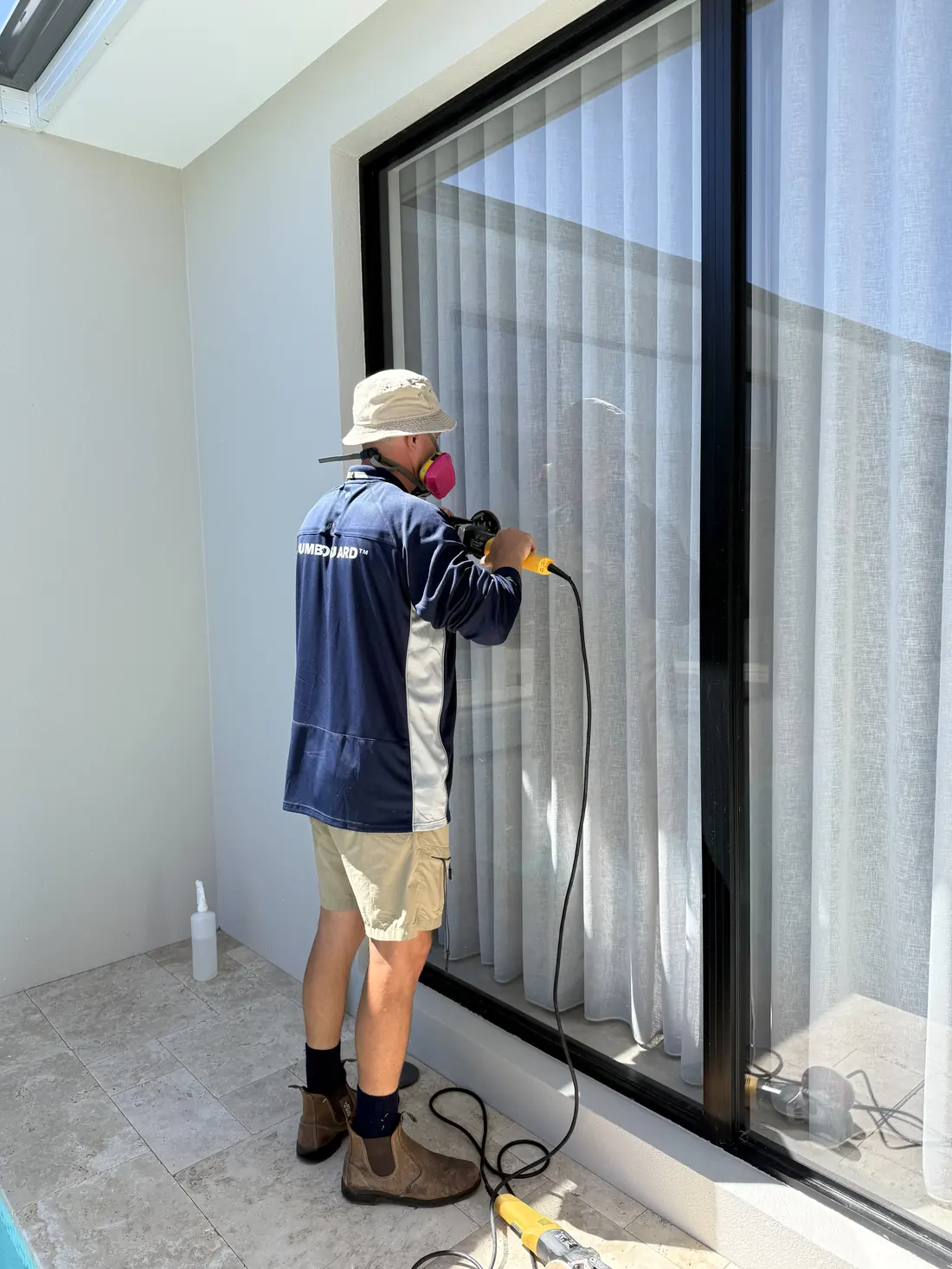
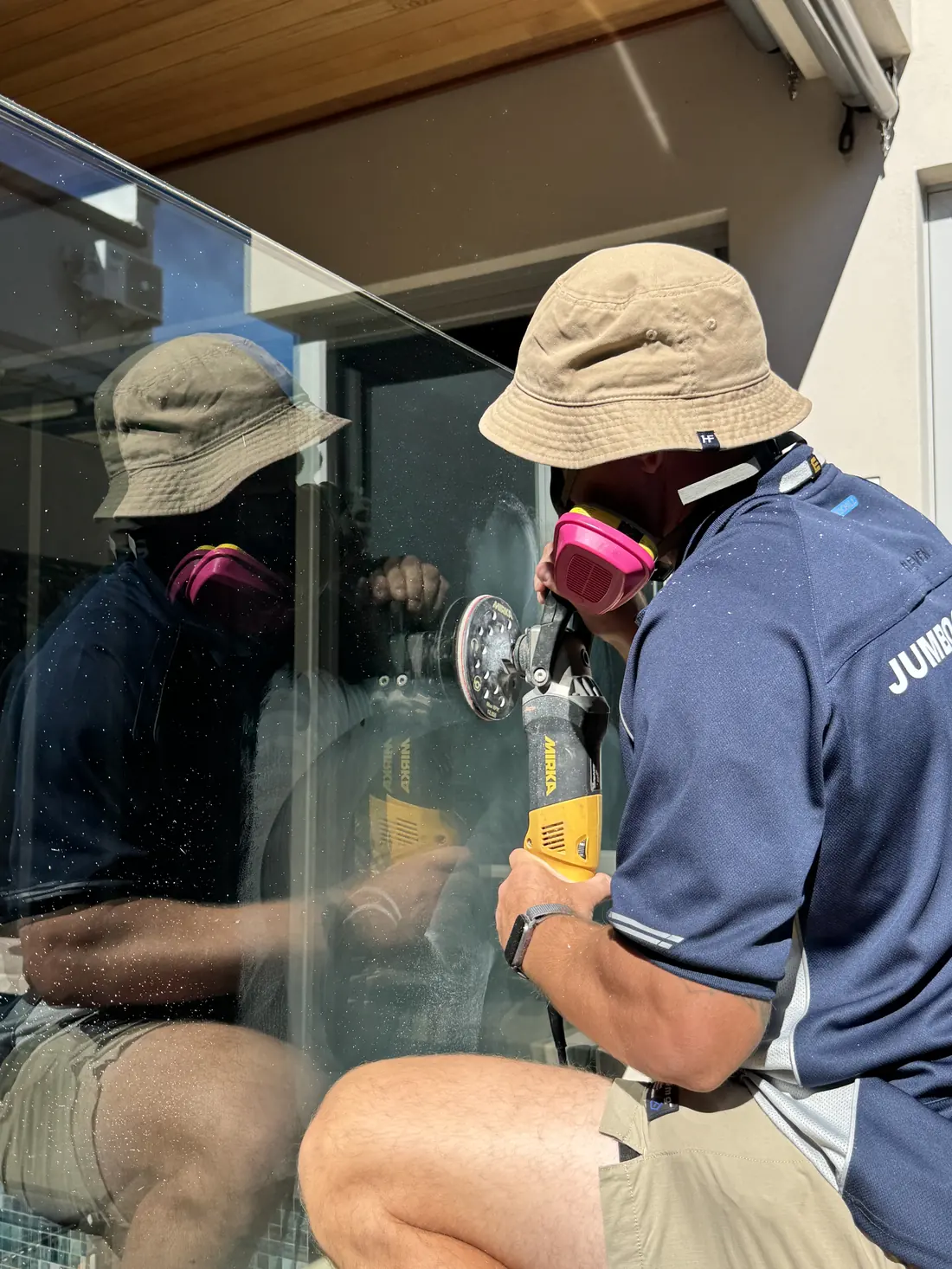
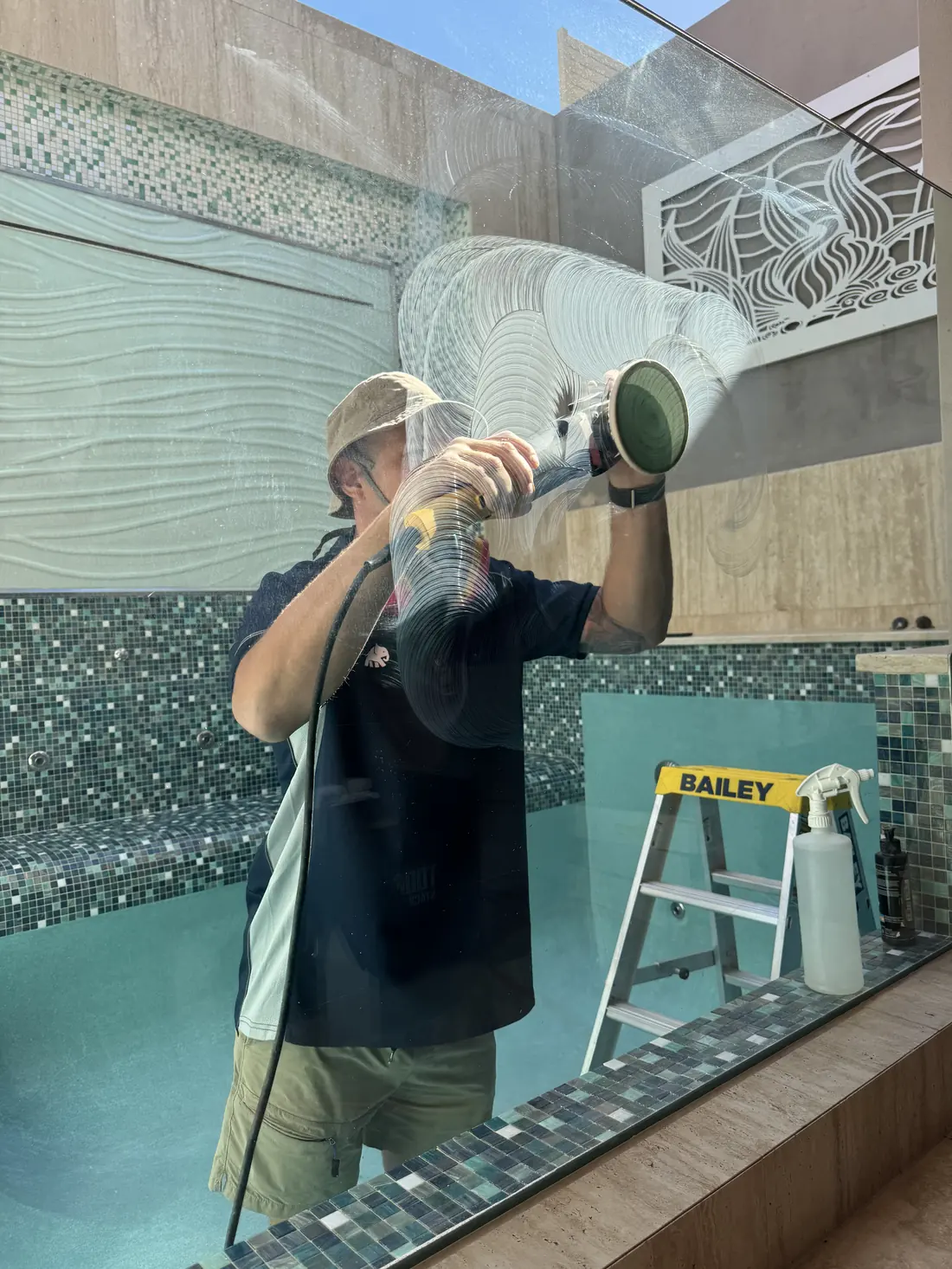
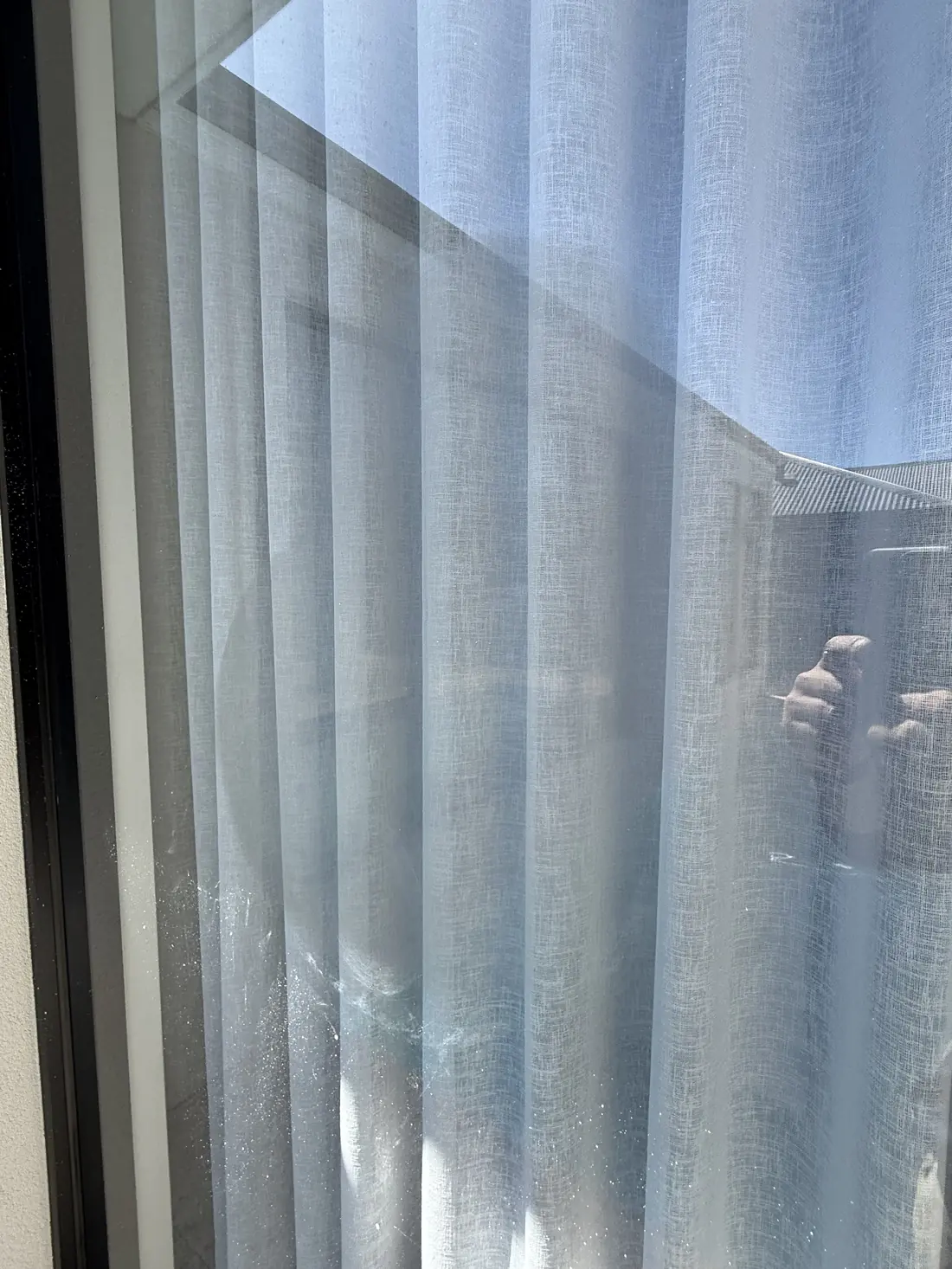
How it's actually done
Take glass off, then blend it back.
A scratch is missing glass. You cannot fill it, so the only honest fix is to bring the surrounding surface down level with the base of the scratch, then make that area optically indistinguishable from the rest of the pane. That second half is where the skill lives.
Read the depth
We assess how deep the scratching goes and how far it spreads. Fine scuffing and a deep gouge are the same process with very different amounts of work in them, and that difference is the quote.
Cut to the base of the scratch
Abrasives take the surface down to the floor of the deepest damage. Which abrasives, and how they are worked, depends on the glass and on what is wrong with it. That judgement is the job, and it is the part that takes years to learn: get it wrong and you distort the pane instead of saving it.
Step down and blend
Progressively finer grits refine the cut and feather the worked area out into the surrounding glass, so there is no edge or ridge where the repair stops.
Polish the clarity back
A cerium-oxide felt-pad polish brings the optical clarity back. Then we check it the way you will: from inside, from outside, and in raking light, which is the only test that matters.
The limits, up front
One thing we can't fix.
Cracked or broken glass is a replacement. It's structural, and no amount of polishing changes that. Everything else on the face of the pane is surface damage, and surface damage comes out.
Beyond that it's a question of how much work, not whether it's possible. Deeper damage takes longer and removes more glass, so we assess it first and tell you what's involved before you commit to anything.
- Toughened, laminated and double glazed. All routine, and the panes most worth saving, because they're the slow and expensive ones to replace.
- Tell us if the glass is surface-coated. A factory coating on the exposed face changes the approach. Flag it if you know, and we'll confirm on assessment.
- Whole elevations, not just one pane. Site-wide spatter and builders-clean damage across many panes is normal work for us.
- Insurance, defect and contra claims. Common on new builds. We're happy to assess and quote in terms the builder, the cleaner or the insurer can act on.
- Every kind of glass but one. Glazing, facades, balustrades, shopfronts, splashbacks, mirrors, partitions and display glass. Not shower screens, where replacement is usually the smarter money.
- Perth and the South West. Metro as standard, South West by arrangement.
Also on glass
The rest of what we do.
Questions, answered
Straight about scratched glass.
Can scratches really be removed from glass?
Yes, and done properly it saves people thousands. A scratch is missing glass, so the fix is to bring the surrounding surface down level with the base of the scratch and then blend and polish that area back into the pane so it reads flat and clear. The reason you will hear it cannot be done is not that it does not work. It is that it is a highly specialised job and very few people are equipped to do it, so the easier answer is to quote you for new glass.
Is scratch removal cheaper than replacing the glass?
Usually, and the gap widens the harder the glass is to replace. On toughened, laminated, oversized, structural or double-glazed units the pane itself is only part of the cost, with remanufacture lead time, access, craneage or scaffold, and on a construction job the programme delay on top. Restoration works on the glass in situ, which is why builders reach for it when a handover date is at stake.
A cleaner scraped our new windows. Who fixes that?
This is one of the most common jobs we get. A blade or a scourer on a builders clean, especially over render dust or fabricating debris, drags grit across the glass and leaves fine parallel scratching over a wide area. It looks catastrophic and it is almost always restorable. It is also usually an insurance or contra matter between the builder and the cleaner, and we are happy to assess and quote it in those terms.
What kind of scratches can't be removed?
If the glass is cracked or broken, that is a replacement, not a restoration, and no amount of polishing changes it. Short of that, scratching is surface damage and surface damage comes out. Deeper gouges take longer and remove more glass, so we assess depth first and tell you what is involved before you commit.
Do you work on toughened and laminated glass?
Yes. Toughened, laminated, double glazed and coated glass are all routine, and they are exactly the panes worth restoring because they are the expensive and slow ones to replace. Surface-coated glass is the one to flag up front, because a factory coating on the exposed face changes the approach, so tell us if you know the glass is coated and we will confirm on assessment.
Do you do shower screens?
No, and that is the one exclusion. Everything else made of glass is worth asking about: windows, facades, balustrades, pool fencing, shopfronts, commercial glazing, splashbacks, mirrors, glazed partitions and display glass. On a shower screen the panel is usually cheap enough that replacement is the smarter money, so we will tell you that rather than sell you a restoration you do not need.
Get it assessed
Before you order new glass.
Send your suburb, how many panes, and a photo taken at a raking angle so the scratching shows. We'll tell you whether it's a restoration or a replacement, and quote the job.